Yet Celtic then turned it on – beating Airdrie 6-1 and St Mirren 7-0 with new boy Bobby Craig playing at inside right and Charlie Gallagher at inside left and playing splendidly. The corner seemed to have been turned, but
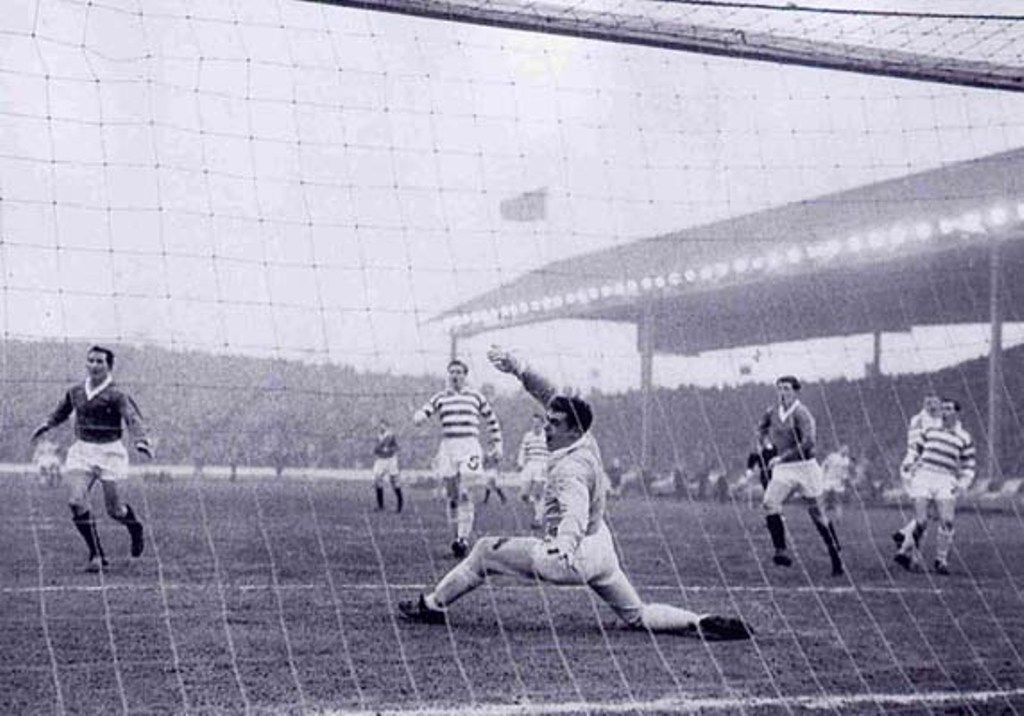
then Celtic blew up again by losing to, of all people, an incredulous Queen of the South at Parkhead. Similarly, a very hard working performance in the Glasgow Cup gave Celtic a deserved but rare win over Rangers one foggy Wednesday afternoon at Parkhead, but then the team blotted their copy book against Partick Thistle three days later and lost 0-2 to kill off what little chance there was of a League challenge that year.
It was a terrible performance from Celtic in front of a big crowd, and Gallagher seemed to be made the scapegoat. He was moved about the forward line during the game, and was dropped for the next few games. He returned to play against Third Lanark on December 15 at Cathkin. Celtic lost 0-2 in what would be the last time that they would ever lose a League match at Cathkin.
1962 thus came to an end with the Scottish Cup the only realistic prospect of a major honour in 1963. 1962 had been no better than 1961, or 1960 for that matter. What was as disturbing as anything was the constant chopping and changing of the team at the whim, apparently, of Chairman Bob Kelly, with no discernible policy in view. If the fans were concerned at all that, it must have been a great deal worse for the players, not least a man like Charlie Gallagher who was as much a victim of this inconsistency in team selection (and therefore inconsistency in results) as anyone else.
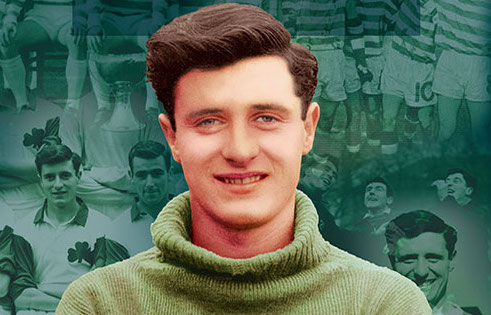
Valid questions might have been asked about his future at Celtic Park. But the team also depended rather too much on Pat Crerand, Charlie’s cousin. Crerand was a brilliant player “the best passer of a ball since Peter Wilson” in the words of one veteran supporter, but it was becoming increasingly obvious that Pat was unhappy and disillusioned at Parkhead. He had cause to feel this way, of course, for the team was going nowhere, and maybe he had been feeling this way since the Scottish Cup final of 1961.
More importantly, it was also becoming increasingly obvious that he was none too popular with Bob Kelly. Maybe Kelly disapproved of his friendship with Jim Baxter (they both wrote a ghosted column in The Evening Citizen every Saturday night and had obviously met on International duty) or maybe Kelly simply did not like his attitude. Pat, for his part, was beginning to entertain previously heretical thoughts that perhaps his career might be advanced at somewhere other than at Celtic Park. He was certainly aware that quite a few English teams had their eye on him, following his performances for Scotland and the Scottish League.
Yet he was Celtic through and through. Celtic had limped to the end of 1962 with a couple of narrow and unsatisfactory wins over Dunfermline Athletic and Queen of the South, but the crisis came on New Year’s Day at Ibrox. It might have been better if the game had been called off. Indeed, the pitch was hard, for a severe frost had hit Scotland on Hogmanay and would not really lift until early March. But the pitch passed the morning inspection, but the conditions were hardly ideal for Gallagher.
The game was a total Celtic disaster. Some historians rate the year 1963 as the worst in all Celtic’s history – certainly it was their 75th anniversary of their first game, and no-one made any great effort to celebrate it –
and if this is so, it certainly began appropriately, for Celtic went down 0-4 to Rangers on a very cold day. But within a few days everyone, in the gossipy city that was Glasgow, knew that Pat Crerand had fallen out badly with Sean Fallon, the Assistant Manager. Where was Jimmy McGrory, it might have been asked?
Celtic were down 1-0 at half-time. The game was by no means lost, especially on the hard pitch where anything could have happened. But when Sean Fallon suggested that Pat might try a little harder and that Celtic should make an immediate onslaught on the Rangers goal, Pat demurred suggesting instead that Celtic should try more containment to limit the damage, then try to hit them on the break. Voices were raised and before anyone could stop them, a full blown argument was going on.
No blows were struck, but Pat, allegedly, invited Sean to do something unlikely with his Celtic jersey. Eventually they calmed down and Pat was persuaded to go out for the second half. Had substitutes been allowed, Pat would probably not have taken the field. (One recalls a similar incident involving Mark Viduka in 2000 in the infamous defeat to Inverness Caledonian Thistle). As it was, Pat hardly kicked a ball in the second half, and made no impact on the game as Celtic collapsed to a 0-4 defeat. Gallagher had a poor game but so too did everyone else. Crerand, on whom so much depended, would never play for Celtic again.
The broken green and white brigade made their way home through the ice and the frost for their consolation New Year drinks, but they could not figure out what was going on. It was well that the game against Clyde on 2 January was indeed called off, and the only thing that saved the next game on 5 January was the fact that it was at distant Pittodrie where the proximity to the east coast made the temperature a degree or two milder.