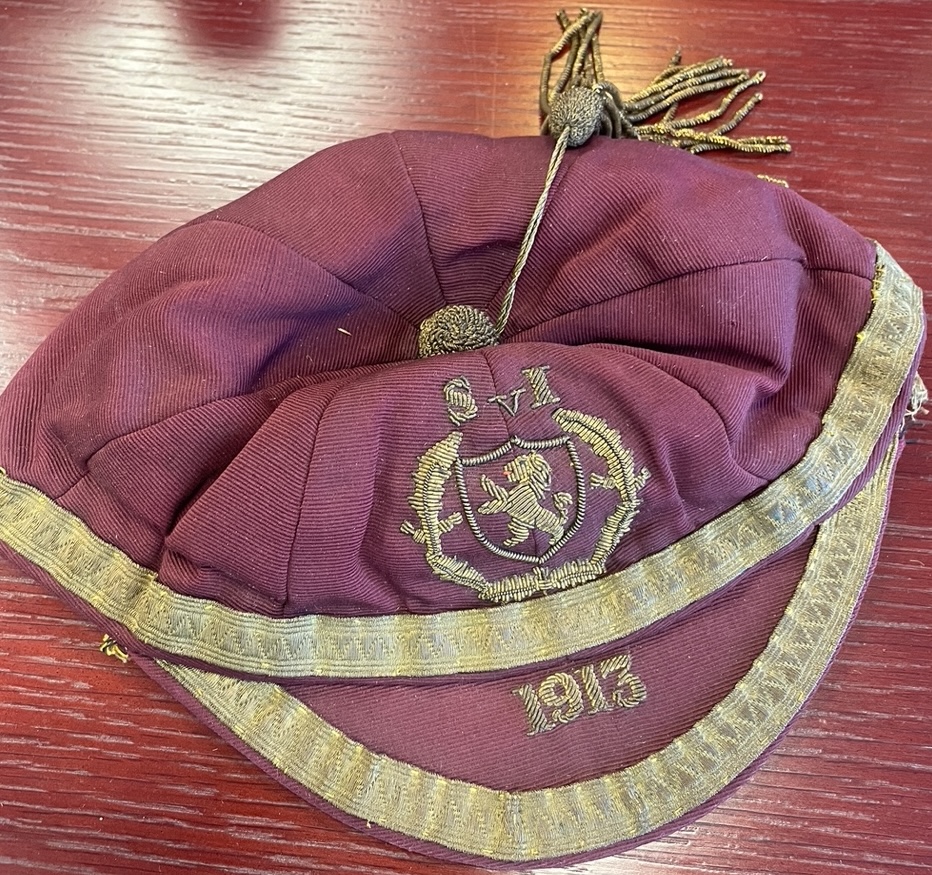
The Daily Record of Monday, 17 March 1913 led with a full page spread on the match, with the report on the above events captured under the heading:
‘WILD SCENES IN DUBLIN’
“SCOTS ATTACKED AFTER THE MATCH.
STATE OF SIEGE.
ASSAULT RENEWED AT THE HOTEL ENTRANCE.
(By “Bedouin”.)
Dublin, Saturday Night.
I was eye-witness to-day to the most sensational incidents I can recall in an International.
Nothing to parallel the wild outburst of inflamed passion was ever known to occur in a national match. Those who were at Dalymount Park will not forget the experience in a hurry.
The moment Referee Adams of Nottingham had given the signal that the game was at an end, George Robertson, the Scottish left-winger, made a dive to the ground to obtain possession of the ball. He was nearest to it when play ceased. The ball used in a big match is a magnet. The scramble for its custody is so common as to excite no interest. It is a ludicrous proceeding at the best.
On all fours Robertson grabbed his prize. For a moment he was lost in the tangle of players and spectators who surged on to the pitch to glorify their heroes.
A spectator kicked the ball out of Robertson’s hands in the direction of Val Harris, the Irish captain, whose magnificent display against the Scots had delighted every patriot on the ground. Irritated at losing the ball, Robertson retaliated. The spectator fell to the ground. A section of the crowd clamoured for blood. On they came to the pavilion. Officials on the spot and a body of the Royal Irish Constabulary kept them at bay with difficulty.
Opinions conflicted about what had actually happened. An impulsive action is often misunderstood. Chagrin at Ireland’s defeat, and a wild rumour about the nature of the accident, inflamed the passions of the crowd.
The players reached the pavilion in safety. Then the row waxed hotter. A gentleman in clerical attire appeared most incensed of the invaders. He burst open the door and gesticulated wildly for someone to be given in charge.
The tumult increased in volume and in violence. Parts of the pavilion were wrecked. The frail structure sheltered the players. That was all. For a time the situation looked ugly. The gravity of the peril could not be exaggerated.
[Jimmy] Brownlie, the Scottish Goalkeeper, told me afterwards he would have given £100 at the moment to have seen the familiar reek of Blantyre’s chimneys. As the hero of Wrexham raised a bottle of lemonade to his lips, crash went the pavilion window. Next minute a boot came through the window. Then a leg. Then a log of wood.
Brownlie thought it was time to see how the referee was getting along. So he popped off to the referee’s room. The situation was no better there.
No sooner had the goalkeeper entered than crash went the glass of the referee’s window. The row outside increased. Extra police came upon the scene.
Describing the sea of faces revealed by the breaking of the clubhouse window, W. Reid, the Scottish centre-forward, remarked to me that murder blazed in the eyes of the infuriated mob.
As the surging, yelling atoms of frantic humanity hurled themselves against the cordon of police and officials who defended the entrance to the pavilion, where the players and Scottish officials anxiously awaited developments, the excited clergyman suddenly mounted a wooden form a few yards from where I was wedged in, and harangued the people.
In guarded language he told them the police could now be left safely to see that justice was done. He appealed in eloquent strain to the patriotism and sportsmanship of Dublin people. In scathing language, he condemned the insult to Dublin’s honour. As a sportsman he appealed to his countrymen not to disgrace the fair name of Dublin.
As the young cleric stood there bareheaded and pale of countenance, the passionate ring of his utterance arrested the attention of the crowd. A few interpolations passed unheeded by him. He knew he had gained the victory as he stepped down from his perch.
Fifteen minutes later I saw him pleading with the people in the densely packed lane leading from the field. They were subdued for the moment, but they hung around waiting for the Scottish players. A spark might kindle afresh the danger.
Continued on the next page…