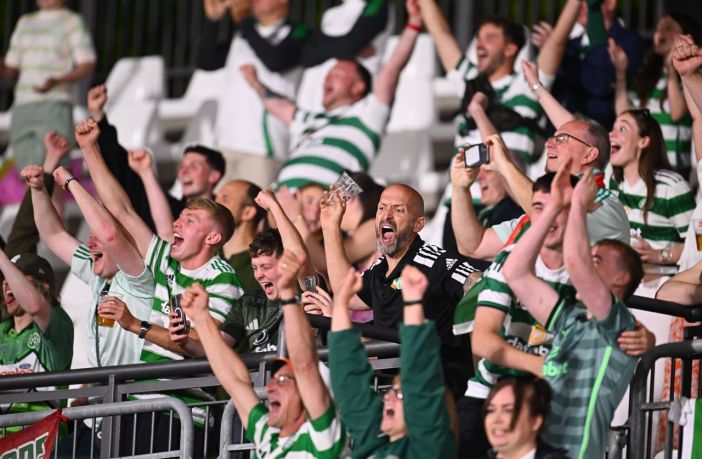
The recent fallout from Celtic’s pre-season trip to Como has sparked a wave of commentary. Among them, the response from Roger Mitchell— a Scottish businessman based in the region and former chief executive of the Scottish Premier League—stood out for its tone and content.

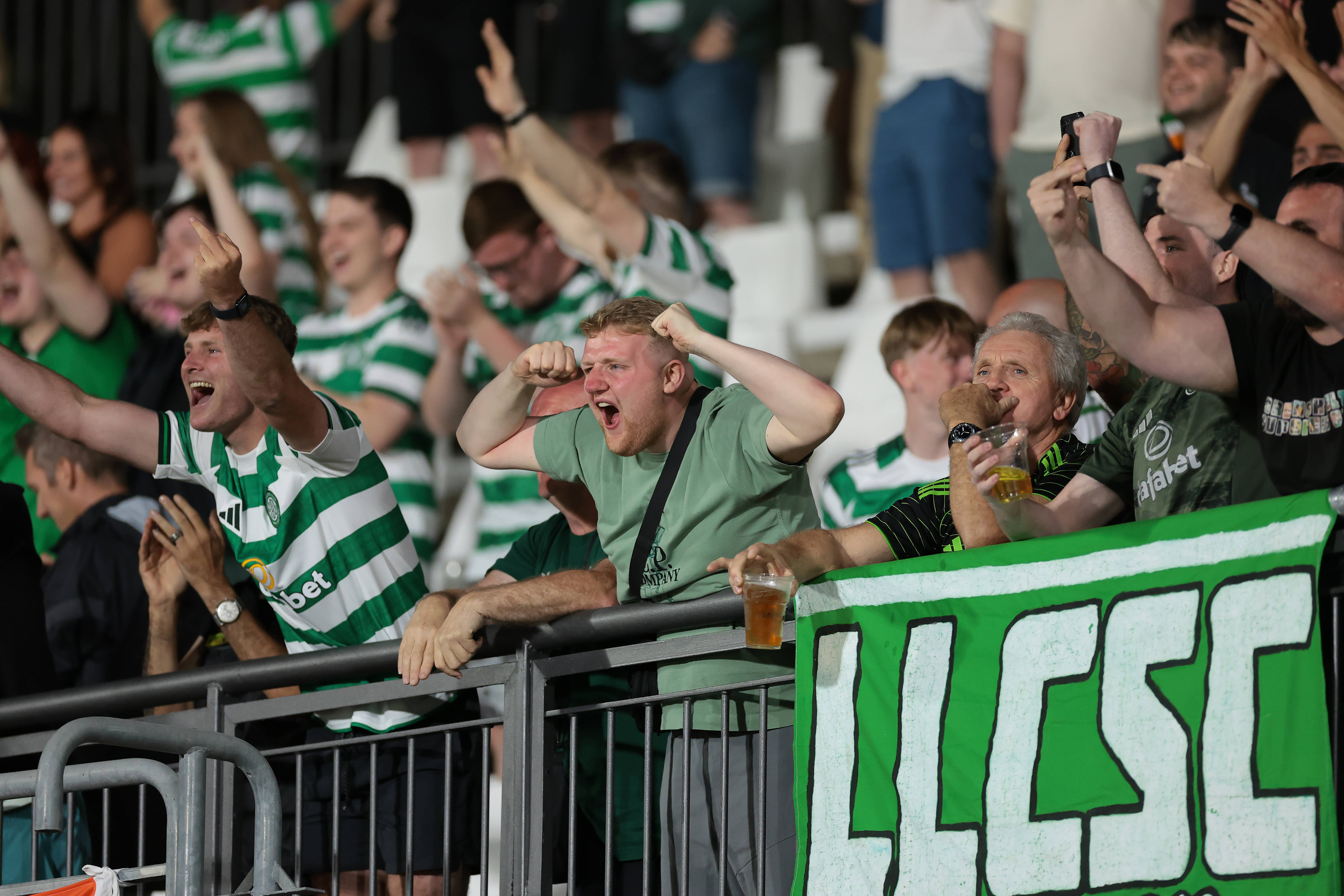
Como, Italy, 26th July 2025. Celtic fans cheer on their team during the penalty shoot out at the end of the Al-Ahli vs Celtic Pre Season Friendly match at Stadio Giuseppe Sinigaglia, Como. Photo Jonathan Moscrop / Sportimage
Mitchell, a self-professed Celtic supporter, publicly criticised some the club’s fans for bringing politics into football, describing their conduct as disruptive and unwelcome. His remarks, especially those referencing the Israeli-Palestinian conflict, have provoked both endorsement and outrage.
But this incident warrants more than a knee-jerk reaction. It raises deeper questions about public discourse, positional privilege, and the shifting relationship between football, identity, and political expression.
During Thursday’s friendly match between Celtic and Ajax, some Celtic supporters displayed pro-Palestinian flags, in keeping with a long-standing tradition of political expression among sections of the fanbase. Tensions between fans of both clubs escalated, resulting in minor clashes and subsequent interventions by Italian authorities. Some fans received DASPO bans—orders barring them from attending football matches—and the spotlight quickly turned to the political symbolism on display.

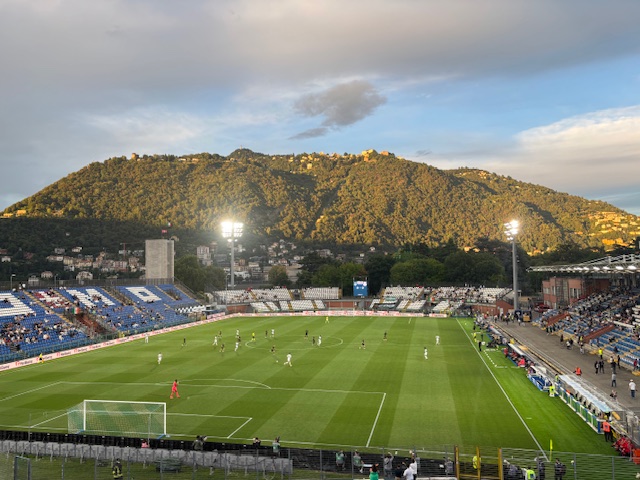
Conor Spence’s view in Como
In response, the Italian Celts CSC, a long-established supporters’ group of Celtic fans living in Italy, released a statement on social media –
“We are Celtic fans born or resident in Italy. We came to Como for the love of our club and were disheartened by the hostility and over-policing we encountered. Political symbolism has always been part of our identity and connection to Celtic’s roots. To be criminalised for expressing solidarity is painful, especially when done peacefully.”
Official statement from the Italian Celts regarding the Celtic-Ajax incident.#CelticFC pic.twitter.com/WMU2UNejcG
— The Italian Celts CSC (@ItalianCeltsCSC) July 26, 2025
Mitchell reacted publicly, sharing his disapproval on social media:
“What a total mess my club has got itself into. Some of us (not many) did try to warn them to leave politics alone… They come here, and make headlines for getting banned from stadia. And cry ‘unfair’. In truth, they are becoming an unwelcome guest. Just play football.”
He followed this with a more explicitly political statement:
“When Iran and its vassals like Hamas recognise the right of Israel to exist, we can have a grown-up discussion on politics.”
What a total mess my club has got itself into.
Some of us (not many) did try to warn them to leave politics alone. They come here, and make headlines for getting banned from stadia (DASPO). And cry “unfair”.
In truth, they are becoming an unwelcome guest. Just play football. https://t.co/OmJhwXvHOP
— Roger Mitchell (@RPMComo) July 26, 2025
Mitchell’s latest remarks are not without precedent. He has previously taken issue with Celtic’s politically engaged support, particularly the Green Brigade. His characterisation of fan activism as immature, dated, or disruptive perhaps reflects disdain for some of the support’s political leanings. Notably absent from his latest critique was any acknowledgment of Ajax’s own checkered history with far-right and racist fan elements—raising questions about where and how Mitchell chooses to apply his outrage.

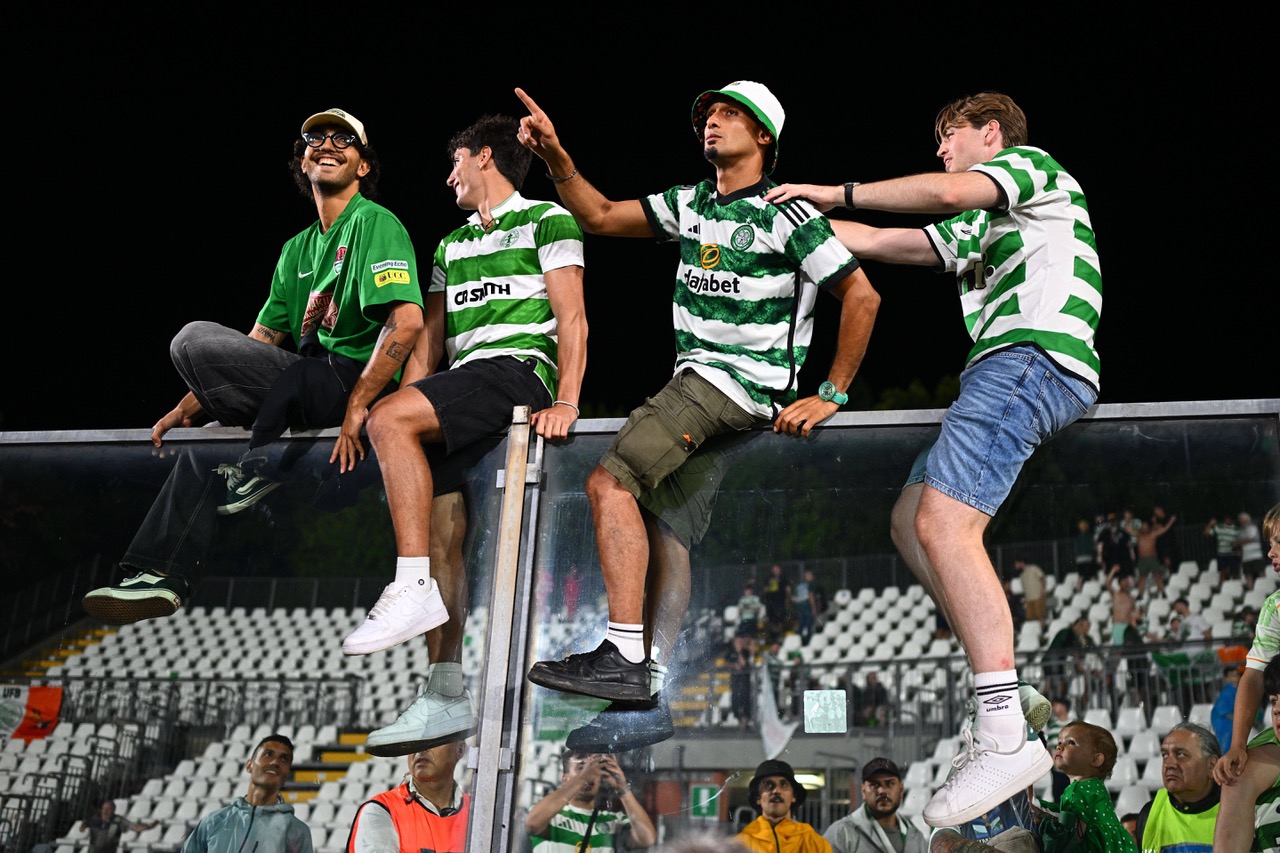
Celtic fans in the stands Ajax v Celtic, Como Cup Pre Season Football, Football, Stadio Giuseppe Sinigaglia, Como, Italy – 24 Jul 2025Como Stadio Giuseppe Sinigaglia Italy. Photo Shutterstock IMAGO
This selectivity matters. When a public figure focuses their condemnation on their own club’s support while ignoring similar or worse conduct from others, it raises the possibility that something deeper is at play.
Some critics argue that Mitchell embodies a deep-rooted discomfort or embarrassment with Celtic’s working-class and politically engaged identity. Now living in Italy and operating as an entrepreneur, Mitchell appears eager to align himself with a more sanitised, apolitical image, perhaps in pursuit of elite respectability abroad.
His language arguably masks a more personal discomfort—less the tough love of a loyal fan, more a distancing approach. The passion and protest that define Celtic’s grassroots culture are, in Mitchell’s telling, liabilities rather than values. In his framing, fan expression becomes a threat to order, to image, to reputation.

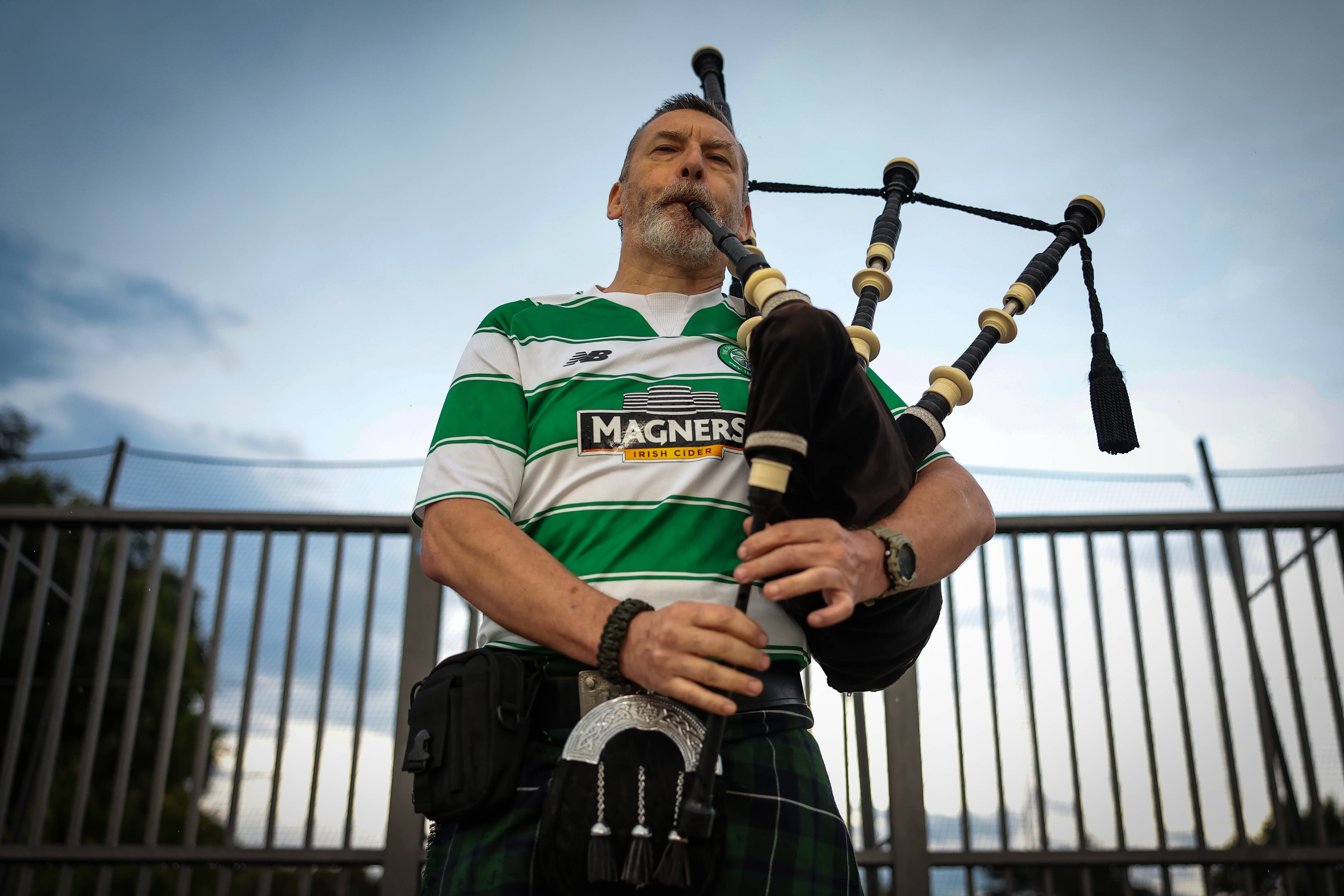
Como, Italy, 24th July 2025. A piper performs in the stands prior to kick off in the Ajax vs Celtic Pre Season Friendly match at Stadio Giuseppe Sinigaglia, Como. Photo: Jonathan Moscrop / Sportimage
This isn’t simply a matter of disagreement. It’s arguably a rejection of a legacy. By reducing Celtic’s politically conscious support to a public nuisance, Mitchell disowns the spirit of resistance and solidarity that has long defined the club. His focus on optics and respectability seems less about constructive criticism and more about self-preservation—an attempt to rise above a culture he perhaps no longer wants to be seen as part of. If you are looking for a deeper dive on that, James Forrest on The Celtic Blog does just that.
To be clear, some Celtic fans were not perfect in Como. Any instances of aggression or escalation—regardless of political motive—deserve scrutiny. But that should not come at the cost of flattening the broader context.
Most fans acted peacefully. Most came not to antagonise, but to support their team while honouring causes they believe in. That kind of expression is not unique to Celtic. It is embedded in the DNA of clubs across the world that see football as more than entertainment.
Calls to ‘just play football’ ignore this reality. Worse, they suggest that political engagement—especially when it challenges mainstream or comfortable narratives—has no place in modern sport.

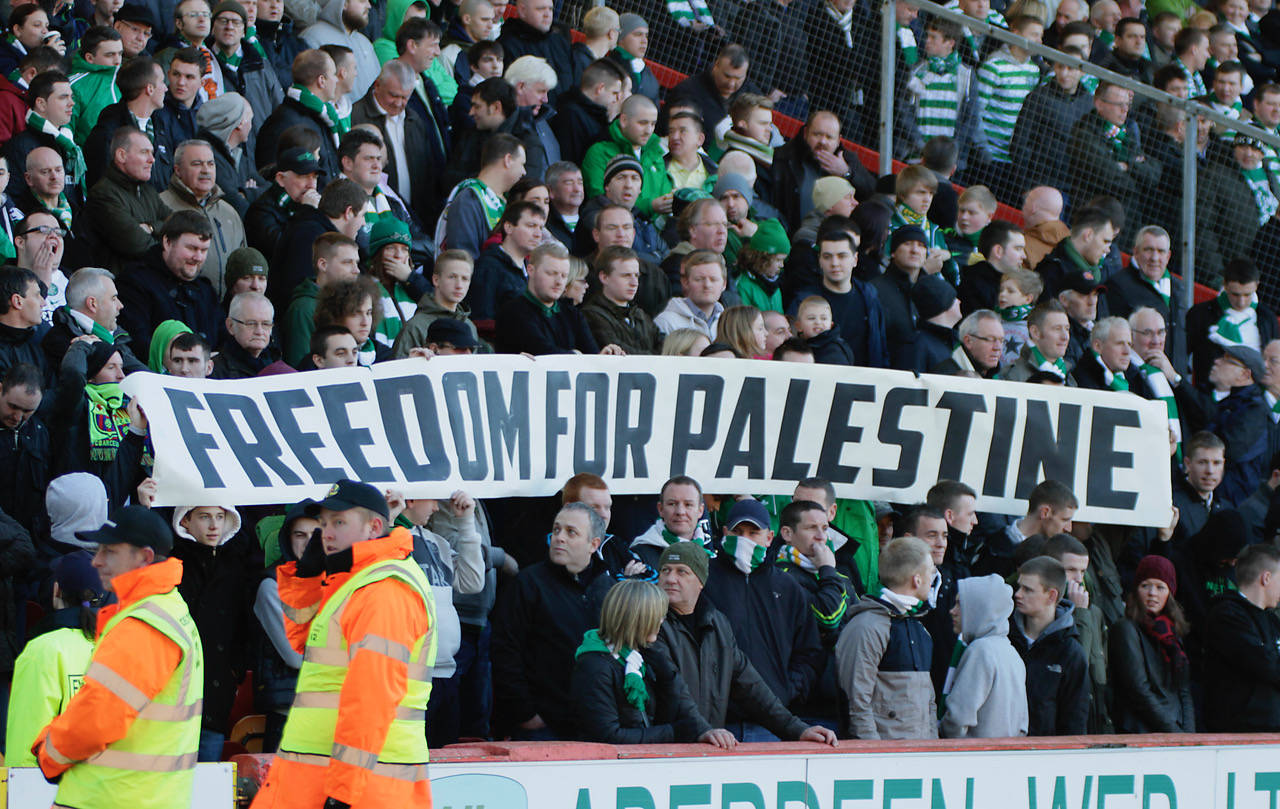
Celtic support unfurl “Freedom for Palestine” banner at Pittodrie on 17 November 2012. Photo Vagelis Georgariou
What this incident lays bare is the persistent myth of apolitical football. Whether through commercial branding, anti-racism campaigns, or expressions of solidarity with global causes, football has always been a platform for wider social meaning. The difference lies in whose politics are deemed acceptable.
Mitchell’s response, in this light, feels less like a defence of neutrality and more like a selective disapproval—one that fails to reckon with the complexities of identity, history, and belonging in modern football.
Roger Mitchell’s criticism of some Celtic fans reflects more than concern about conduct—it reflects a broader unease with the club’s political soul. While his desire for order or image control may be understandable in a business context, it is ultimately out of step with what Celtic represents to not all, but many of its supporters.


Fans can and should be held accountable when they overstep. But equally, public figures—especially those who claim to love the club—should be honest about what they’re distancing themselves from, and why.
In the end, the tension isn’t just about what belongs in the stadium. It’s about who gets to define the soul of a club, and whether that soul is something to be celebrated—or something to be managed, sanitised, and pushed to the margins.
That’s a debate worth having. But it starts with listening—not lecturing.
Niall J
Read this – The backstory to Celtic in the Eighties by David Potter
Thank you to everyone who has already pre-ordered the late David Potter’s last ever Celtic book, Celtic in the Eighties, which will be published on the fifth day of September by Celtic Star Books. The link to pre-order your copy is below…

Celtic in the Eighties by David Potter, out 5 September 2025. Available to pre-order now.


Help raise funds for Celtic Youth Academy by playing the Celtic Pools Weekly Lottery and you could win up to £25,000. The lottery is £1 per week. Click on image to join.