The Celtic View was an immediate success
From the start, the View proved to be popular with fans, selling tens of thousands of copies in its first week, and building on this in the following years. Since that first copy, the look has changed numerous times, going from a black-and-white (and green!) newspaper-style to a full-colour magazine-style in more recent years.
The publication’s success stemmed from its inclusion of features which fans wanted to see. As well as interviews with players and the manager, there were also sections which covered club history, statistics and fixtures and other sections. Quizzes and fan photos help boost sales too.
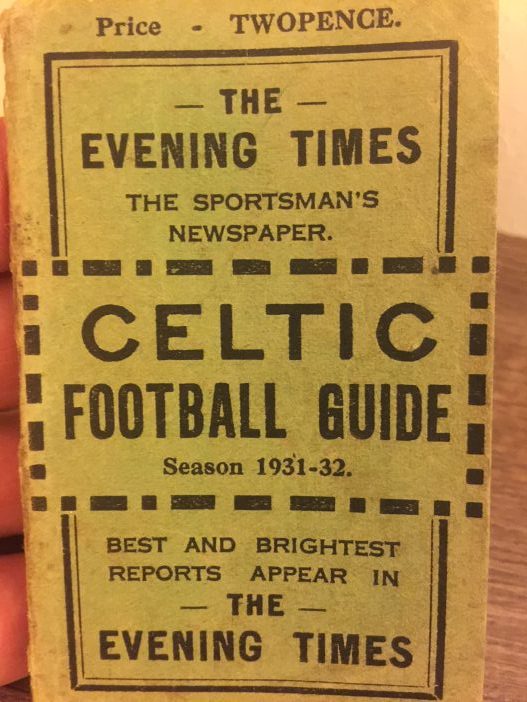
Wee Green Book
However, as well-liked as the Celtic View became, it was far from the first club publication that was popular with supporters. As well as the Wee Green Book, the most obvious other one was the matchday programme. The CelticProgrammes.co.uk website gives a fascinating insight into the history of these.
There are examples of matchday programmes which can be found as far back as the 1920s, including a Celtic game versus Hearts in 1929. However, these were not official club publications and instead printed by a private company.
In 1946 Celtic finally published a match-day programme
In the aftermath of World War Two, Celtic did finally publish their own programme. This happened for the 1946 New Year’s Day game when Rangers came to Glasgow’s east end. The four-page publication was the only one of its kind made that season. Almost at the very end of 1946, Celtic printed another programme, this time for a visit by Clyde to Celtic Park. Thereafter, the publication of these documents became much more common.
In 1947-48, Celtic made a programme for every home game of the season. Although given that this was also the same year that the Bhoys came close to relegation – needing a last-day win to guarantee their safety – it could be seen as something of a jinx!
By the time the 1950s began, programmes were becoming a common sight at Celtic Park as well as grounds across Scotland and further afield. This was the era when they became an item for collectors, with many people keeping them as prized possessions.
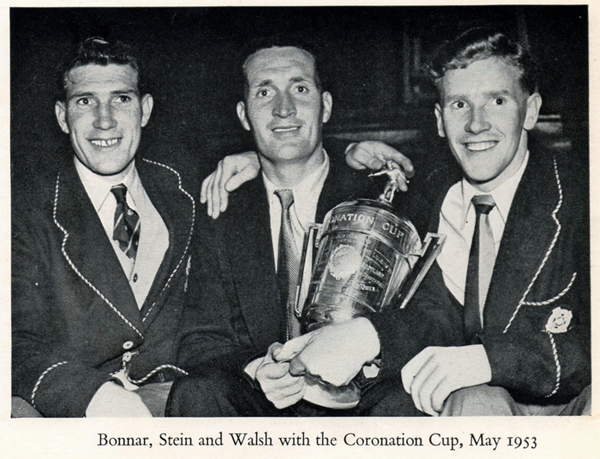
Celtic stars Bonnar, Stein and Walsh with the Coronation Cup in 1953. Photo The Celtic Wiki