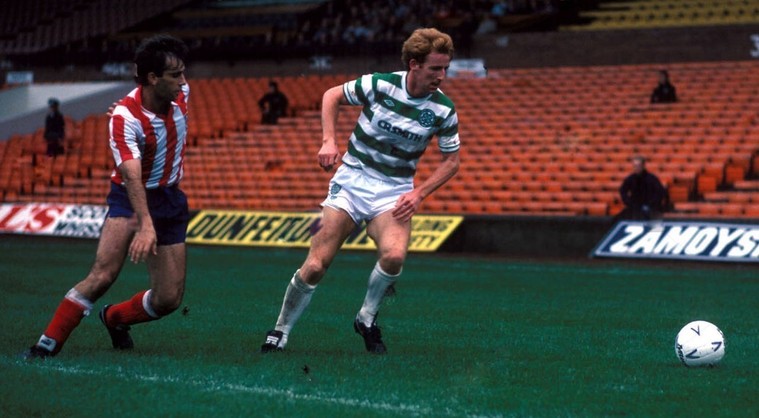
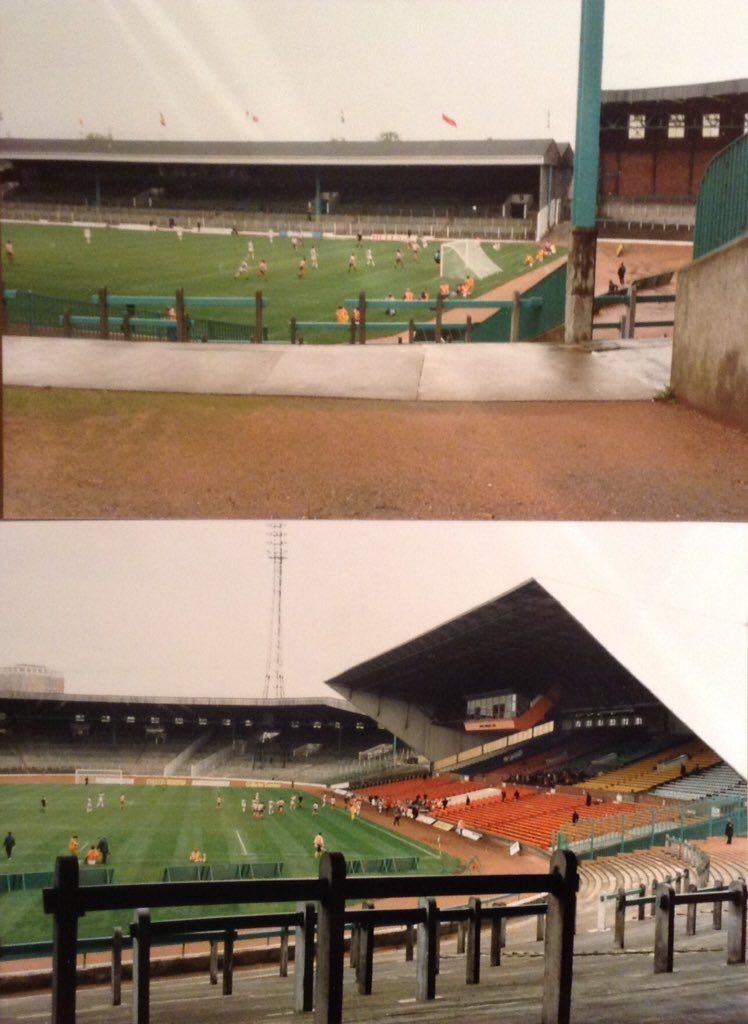
Celtic v Atletico Madrid, Behind Closed Doors match in September 1985.
The Rapid Vienna saga had resulted in a catastrophic double-punishment for Celtic. In footballing terms, the Rapid affair had severely damaged TWO seasons of European competition for Celtic.
It eliminated Celtic at the Second-Round stage in 1984 and had arguably a decisive impact on the Atletico result in 1985. The Celtic players had been robbed of the chance to develop European experience in both seasons. In financial terms, Celtic lost around £250,000 from EACH of two home European ties- the potential revenues from a quarter final tie in March 1985 and then from the empty stadium in October 1985. In total Celtic suffered the loss of a MINIMUM of £500 000.
Rapid Vienna fiasco…exerted a profound effect on the club
The short-term impacts were clear at the time. The longer-term consequences would only be revealed during the remainder of the decade and beyond. “The Rapid Vienna fiasco…exerted a profound effect on the club,” argues Graham McColl in Celtic in Europe. The early exits in 1984 and 1985 deprived the players of the chance to build experience in Europe, precipitating a downward spiral which meant that “Celtic were less and less prepared for Europe with every passing year.” Results in the second half of the Eighties support McColl’s case.
In this sense, the Atletico Madrid tie can be viewed as something of a watershed for Celtic’s performances in Europe. In the early Eighties, Celtic had come agonisingly close against sides who went on to reach the European Cup semi-finals (Real Madrid and Real Sociedad), Cup Winners’ Cup finals (Rapid Vienna and Atletico Madrid) and the UEFA Cup semi-final (Nottingham Forest). After the loss to Atletico Madrid in 1985, Celtic suffered successive early exits to Dynamo Kiev, Borussia Dortmund, Werder Bremen and Partizan Belgrade. NONE of the latter sides reached the final of the competition, with only Dynamo Kiev reaching a semi.
From October 1985, Celtic could no longer compete against Europe’s best
Quite frankly, from October 1985, Celtic could no longer compete against Europe’s best. During the remainder of the Eighties, Celtic fans would suffer a series of successive letdowns. Before considering these “Late Eighties Letdowns”, the next article will review the main reasons why Celtic’s story in European football from 1980-85 was one of unfulfilled potential.
James McDevitt
THE IDEAL CELTIC CHRISTMAS GIFT FOR CELTIC DADS
Order your copy of Celtic in the Eighties by David Potter, which will be personally signed by Danny McGrain! Plus we’ll send you a FREE copy of Willie Fernie – Putting on the Style – Click on image to order!